L’Oratoire des Papes Portfolio: 4 terroirs, 4 wines, 100 years of history
In Châteauneuf, everything is about blending; with 13 varietals allowed in the appellation, much of the history and fame has been attributed to master blenders. There are however also houses that have gained as much fame for going against the practice of blending, using mostly one grape or basing their wines on some of the lesser-known varieties.
At L’Oratoire, they take influence from both schools of thought, but here everything starts in the vineyards. While their wines are mostly based on Grenache, the focus of the winery is much more on the soils than the varietals. The ultimate goal is to express the region’s terroirs as filtered through the various grape varieties available to them.
This focus on soil has led toward organic viticulture and eventually beyond. In 2018, they decided to stop using organic-certified fertilizers in exchange for exclusively naturally occurring fertilizers by way of sheep, cows, and horses. They implement various grassing techniques that naturally aerate the soil, mitigate weeds, and fix nitrogen. They also practice no-till farming, making sure to maintain the natural structure of the soils. All of this together helps promote healthy soil and increase biodiversity in the vineyard. It is this living soil that helps create living wines indicative of their terroirs.
The winemaking is very traditional, starting with the hand-harvesting of all plots. The white grapes are picked a touch early to preserve freshness, while the reds are harvested right at the peak of phenolic ripeness. The reds are fermented in large, upright used barrels,each barrel a different co-fermentation, either between varieties or between soil types. They rest in these barrels for a year and undergo initial blending before moving to concrete vats for another year.
The whites go through a whole-bunch slow press, and are then fermented in 80% tulip-shaped concrete and 20% large French oak, where they also age for a year. The entirety of the winemaking process happens within the ancient priory, and the aging takes place underground in the ancient troglodyte caves.
See below for the exact breakdown of grapes, terroirs, and the aging process for each cuvée.
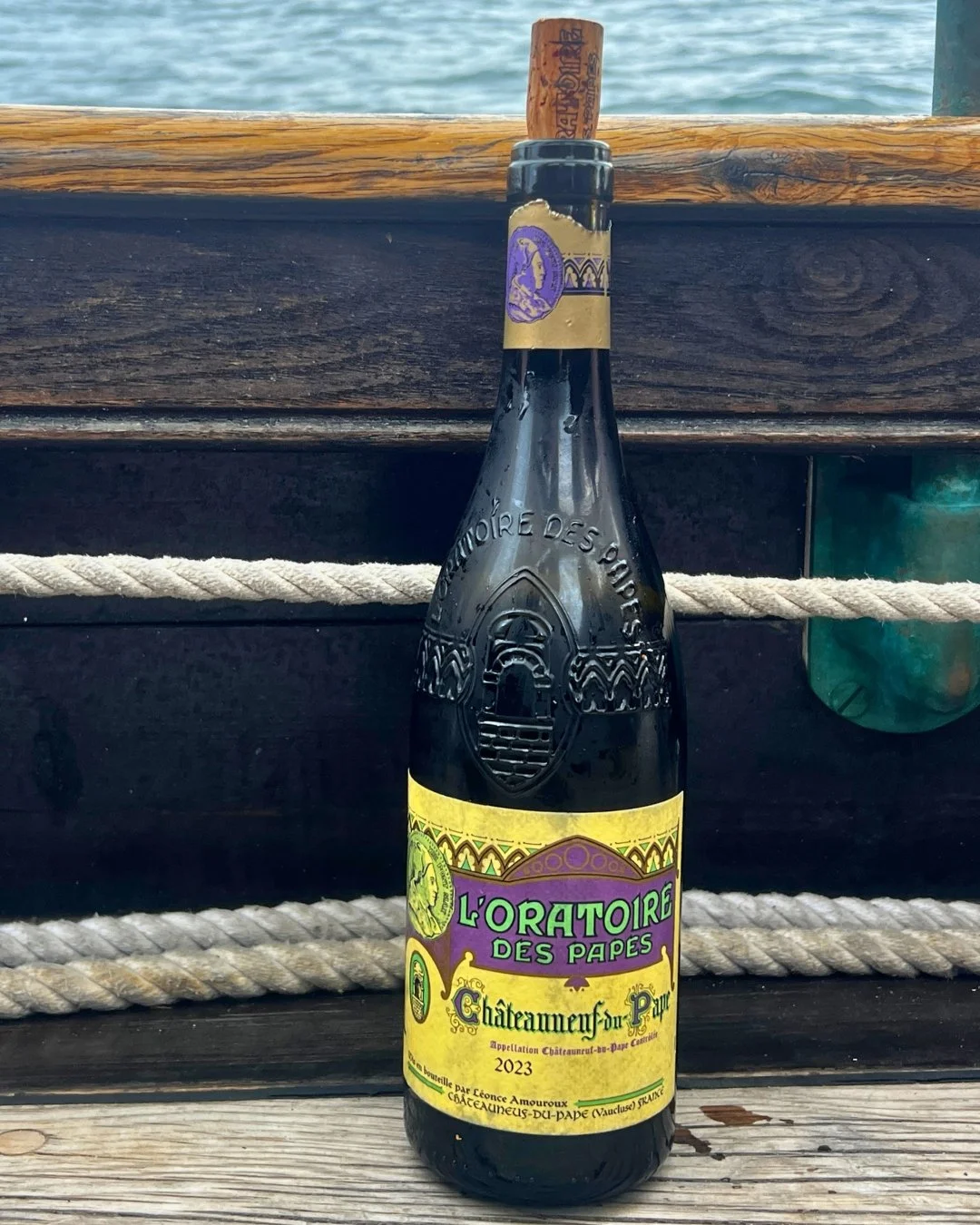
Chateauneuf-du-Pape Blanc
The Wine: While CdP Blanc only makes up about 5% of the total appellation's production, L’Oratoire des Papes makes about 20% white wines. This is sourced exclusively from limestone soils, making it one of the freshest and most mineral-driven white wines in the Rhône.
Winemaking: 25% each of Grenache Blanc, Bourboulenc, Clairette, and Roussanne. Hand-harvested, fermented naturally in 80% concrete and 20% large French oak. The wine is aged for about 6 to 8 months before bottling.
Tasting Note: Such a pretty and elegant wine from a region that makes mostly overripe, flabby whites. Small white flowers, lime zest, and minerality, with some hints of tropical fruits in warmer vintages, all balanced out by fresh acidity.
MSRP: $85
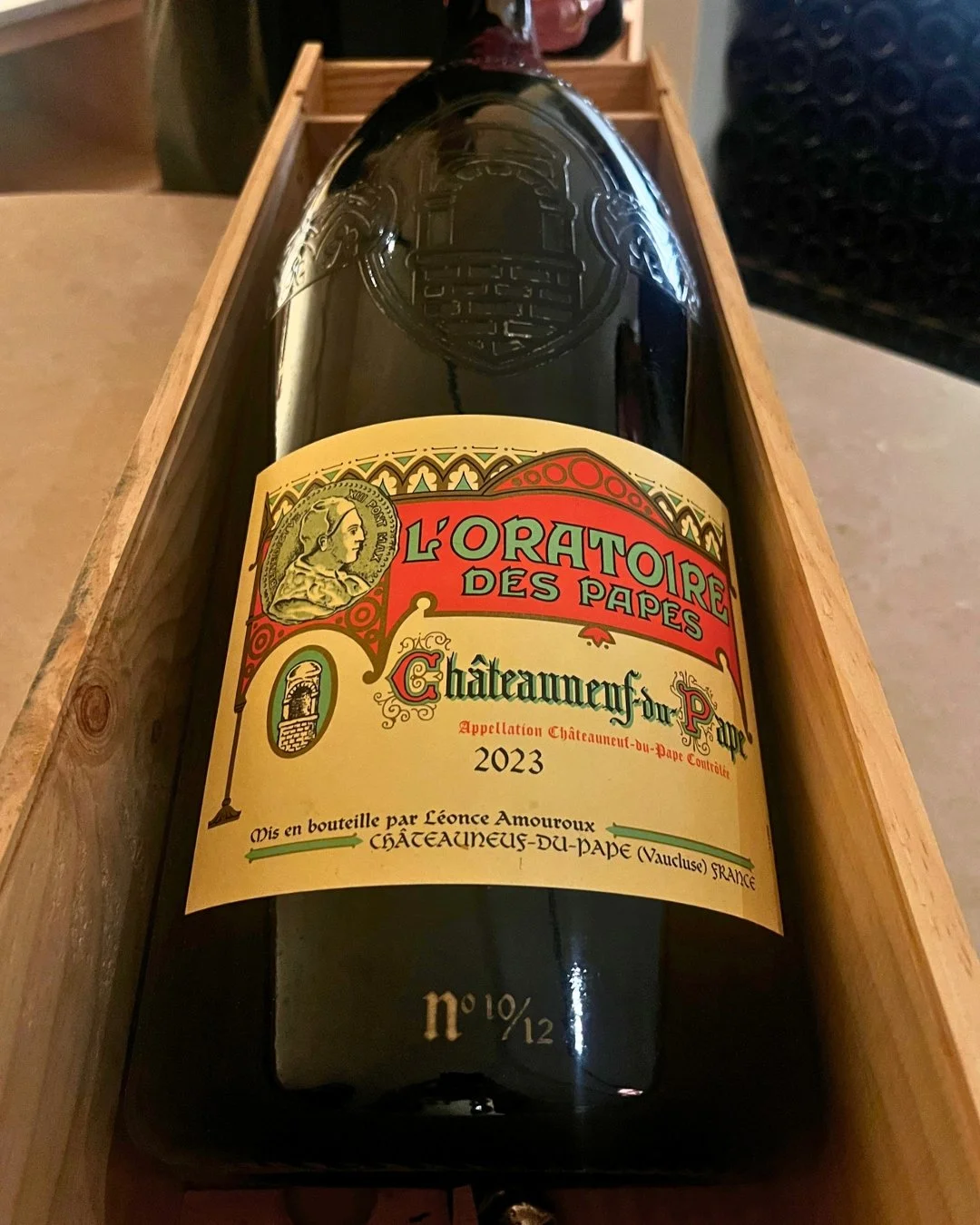
Chateauneuf-du-Pape Rouge
The Wine: The historic original label of the house. This is the flagship wine made from all four terroirs of the southern Rhône: sand, sandstone, galets roulés, and limestone.
Winemaking: A blend dominated by Grenache with lesser amounts of Mourvèdre, Cinsault, and Syrah. The grapes undergo various co-fermentations and varying levels of stem inclusion depending on the vintage. The wine ferments in large, upright used barrels for 12 months before moving to concrete vats for an additional 8 months.
Tasting Note: This is classic CdP meets modern freshness. Tons of red and black fruits, cherry, strawberry, cassis, plum, with a hint of pepper, rosemary, and herbes de Provence. A bit of licorice and spice round out the palate.
MSRP: $85
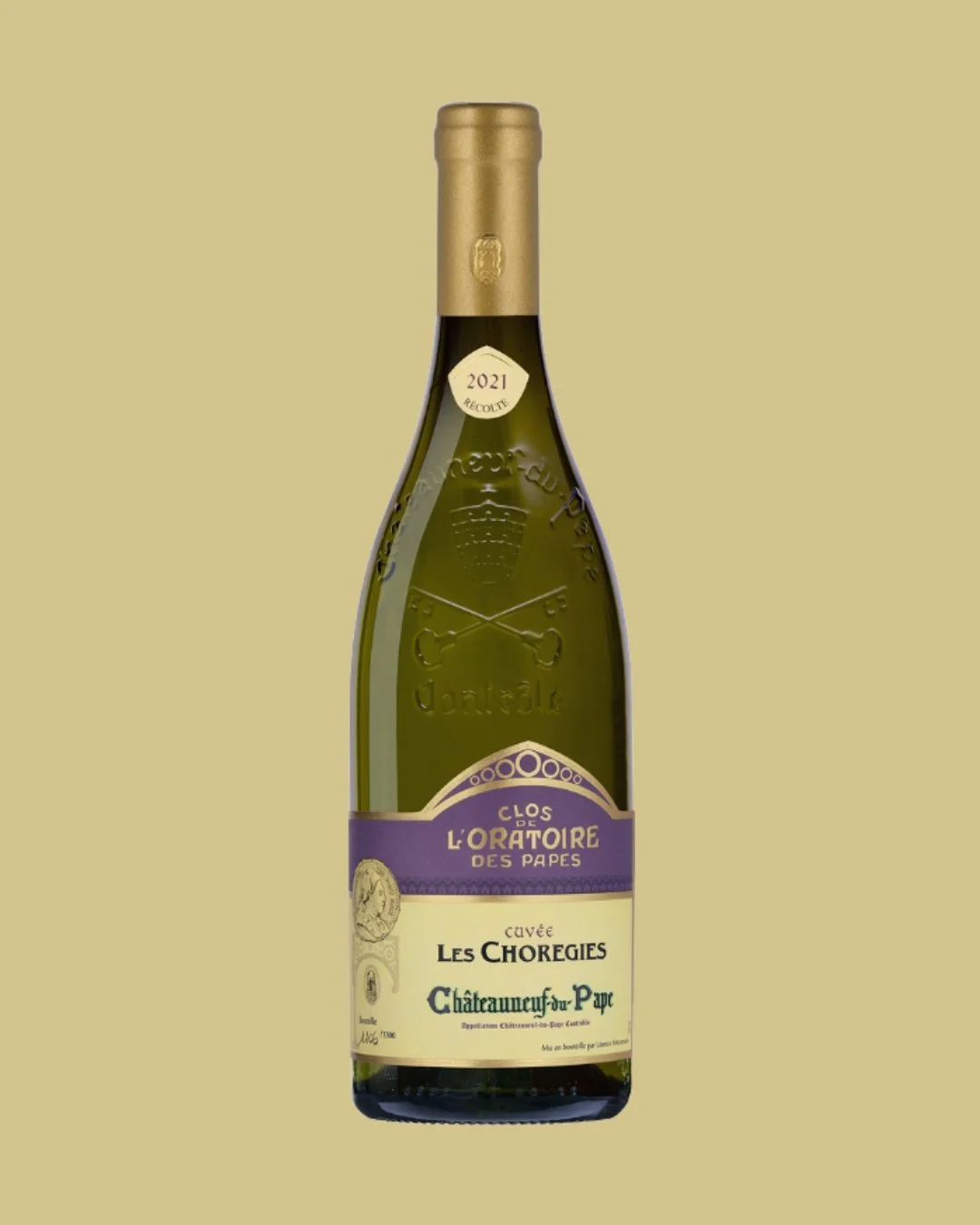
Chateauneuf-du-Pape Blanc
Cuvee ‘Les Choregies”
The Wine: Les Chorégies is a parcel selection of the best and oldest plots of Bourboulenc and Clairette grown exclusively on limestone. The idea is to pair the varieties that have the lightest varietal expression with the soil that is most expressive to highlight the soils as much as possible and not the grape.
Winemaking: Bourboulenc and Clairette from the oldest vineyards are fermented and aged in 600L ceramic amphorae and 300L French oak, where the wine rests for around 8 months, followed by another 10 months in bottle.
Tasting Note: An incredibly delicate wine; fresh white flowers and salinity balance a light touch of vanilla. A pure expression of limestone in the southern Rhône.
MSRP: $145
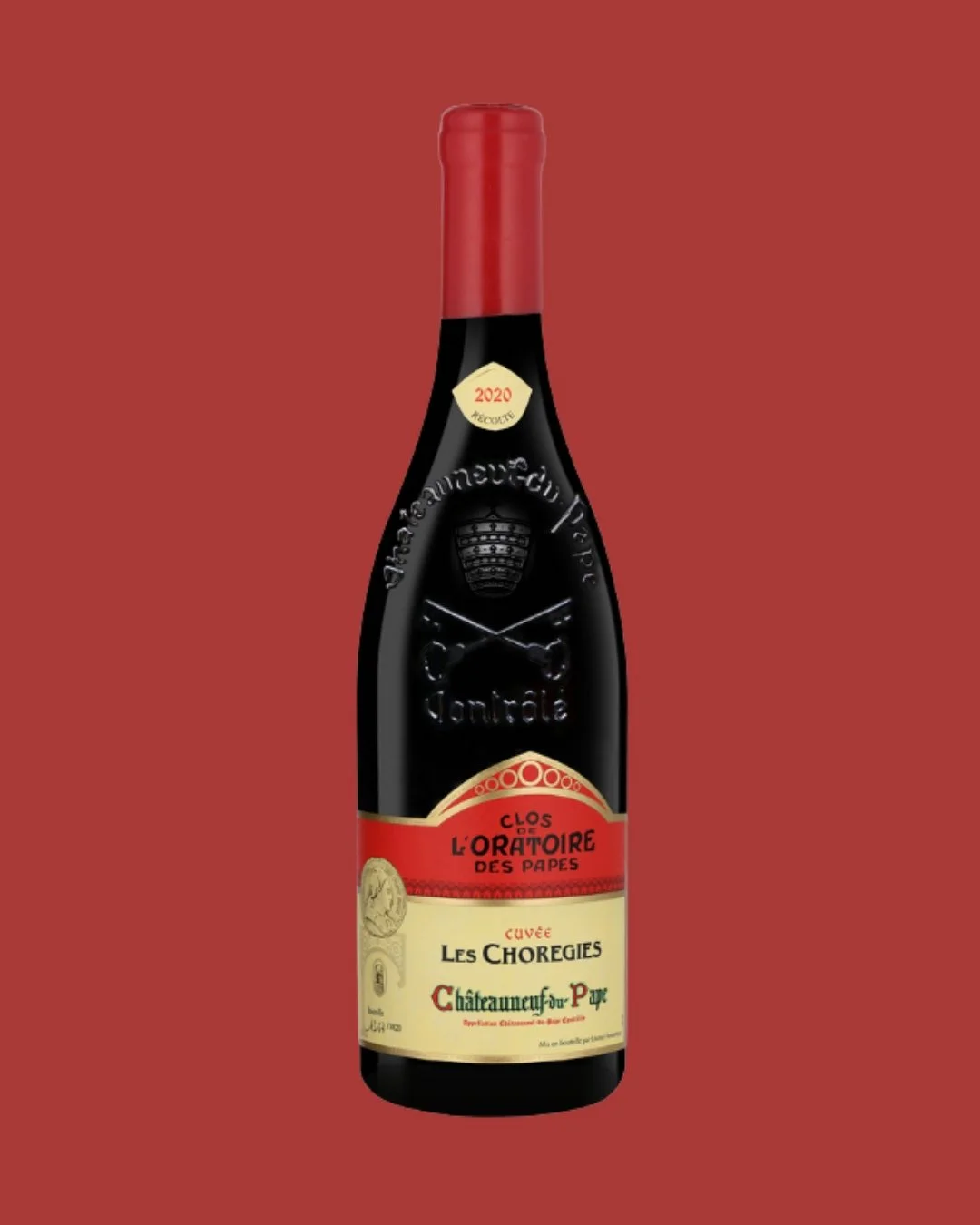
Chateauneuf-du-Pape Rouge
Cuvee ‘Les Choregies’
The Wine: Les Chorégies Rouge is a parcel selection of the best and oldest plots of Grenache and Mourvèdre grown only on galets roulés and sand soils. This is the top cuvée and represents the heart of CdP as expressed by Édouard Guerrin.
Winemaking: 90% Grenache and 10% Mourvèdre, fermented and aged exclusively in large 18.7 HL wood tuns. The wine remains in those barrels for 12 months, followed by another 8 months in concrete, and then rests in bottle for 30 months before release.
Tasting Note: An incredibly balanced wine showcasing the delicacy of Grenache with the punch of the galets roulés. The extra age brings out a touch of balsamic umami to complement the light red fruits and bright floral components.
MSRP: $145
